After the cover, the description is the most important thing on your book's page. The cover earns the click; the description earns the sale. Yet many authors write it last, in a hurry, as a summary of the plot. A summary tells readers what happens. A good description makes them need to find out.
The structure that works
| Part | Fiction | Non-fiction |
|---|---|---|
| 1. Hook | A line that raises a question or shows a striking situation | The reader's problem or desire, named sharply |
| 2. Setup | Who the main character is and what they want | Why the problem persists and what's been missing |
| 3. Conflict or promise | What stands in the way, and what's at stake | What the book gives the reader, in concrete terms |
| 4. Reassurance | Genre signals: tone, comparable books, heat or violence level | Why this author, and what's inside |
| 5. Call to action | An invitation to start reading | An invitation to start today |
Writing the hook
On most stores, only the first few lines show before "Read more". Those lines carry the whole description. Strong hooks usually do one of these:
- Raise a question: "Everyone in Harrow Bay knows the lighthouse keeper died in 1953. So who's been lighting the lamp?"
- Name a sharp problem: "You've read the productivity books. Your to-do list is still longer than your day."
- Show a striking situation: "On the morning of her wedding, Clara finds a letter from the groom's first wife."
- State a bold benefit: "Thirty days. Ten minutes a morning. A faith that holds when life shakes."
Avoid opening with setting description, background history or the character's name alone. They don't give the reader a reason to keep going.
Fiction: sell the story, not the plot
Fiction descriptions focus on one character, one desire and one obstacle. Resist listing every subplot. Readers want to know who they'll follow, what that person wants, what's standing in the way, and what happens if they fail.
Before (a plot summary): "In this novel, Clara Reyes is a lawyer in Chicago. She is getting married to Daniel. On the day of her wedding, she finds a letter. The book follows her investigation into Daniel's past, and she meets various people along the way, including a detective and her estranged sister."
After (a description): "On the morning of her wedding, Clara finds a letter from the groom's first wife. The wife Daniel swore never existed. Now Clara has six hours to decide whether to walk down the aisle, and one question she can't stop asking: what happened to the woman who wrote it?"
Illustrative example written for this guide.
Non-fiction: sell the outcome
Non-fiction readers buy a result: understanding, a skill, relief from a problem, a changed habit. Lead with their problem, show that you understand why it's hard, and then say exactly what the book gives them. A short bulleted list of what's inside works well.
Before: "This book is about productivity. It covers many topics including time management, habits and focus, drawing on research and the author's experience."
After: "You've tried the apps, the planners and the 5 a.m. alarms. Your days still slip away. This book shows you why, and gives you a simple daily system that fits real life. Inside you'll learn: how to plan a day in five minutes; the one habit that protects your best hours; and how to finish work without taking it home."
Illustrative example written for this guide.
The closing line
End with an invitation that matches the book's tone: "Start reading today", "Open the first page and meet Clara", or for a devotional, "Begin day one this morning". It's a small nudge, but it turns a reader who's interested into one who acts.
Formatting for online stores
- Short paragraphs: one to three sentences. Most readers see your description on a phone.
- Line breaks between sections, so the hook stands alone.
- Bold, sparingly, for the hook or one key line, where the store supports it.
- Bullets for non-fiction "what you'll learn" lists.
- No walls of text, and no all-capital shouting.
Length and limits
| Store | Limit |
|---|---|
| Amazon KDP | Up to 4,000 characters |
| BooksOasis | At least 100 characters, required before submitting |
| Other stores | Check each store; limits vary |
Limits are ceilings, not targets. Most strong descriptions sit between 150 and 300 words. The first 40 to 60 words matter most, because that's what shows before the reader chooses to expand.
Keywords without stuffing
Readers and store search both look for words that describe what a book is: genre, subgenre, setting, era, subject, themes. Use them naturally. "A cozy mystery set in a Cornish fishing village" helps both readers and search. A line of repeated keywords helps neither and can break store rules. Your categories and keyword fields are the place for the rest.
Series descriptions
For a book in a series, say early where it sits ("Book 3 in the Harrow Bay Mysteries") and whether it can be read on its own. Don't spoil earlier books in the opening lines, which appear in search results. For book one, a line at the end ("The first in a new series") tells readers there's more to come. See how to publish a book series.
Genre signals
Readers decide within seconds whether a book is "for them", and they read genre cues as much as plot. A description should confirm what the cover suggests.
| Genre | Signals readers look for |
|---|---|
| Thriller | A ticking clock, danger, a protagonist under pressure |
| Romance | The couple, the obstacle between them, the tone (sweet, steamy, funny) |
| Cozy mystery | A small community, an amateur sleuth, no graphic violence |
| Fantasy | The world, the stakes for it, the hero's role |
| History and biography | The era, the figure, what's revealed that readers don't know |
| Self-help and business | The problem, the method, the result |
| Faith and devotionals | The theme, the daily format, the encouragement offered |
Writing about yourself
For non-fiction, one or two sentences on why you're the right person to write the book can help: relevant experience, research or credentials. Put it after the promise, not before, and keep it about the reader's benefit ("after twenty years coaching new managers..."). For fiction, save your biography for the author page; the description belongs to the story.
Testing and updating
A description isn't fixed forever. If a book gets page views but few sales, the description (or the price) is often the problem. Change one element at a time, starting with the first line, and give each version a few weeks before judging. Keep a note of each version and the dates, so you know which change made the difference. Before you publish any version, read it aloud: clumsy sentences are obvious when spoken.
Honest proof only
A genuine review quote, an award, or a notable endorsement can reassure readers, placed after the hook. But only use real, accurately quoted praise from sources you can name, and never imply endorsements you don't have. Invented or inflated claims break store rules and cost readers' trust, which is far harder to rebuild than a sale is to make.
Common mistakes
- A plot summary instead of a hook, conflict and promise.
- Too many names and subplots in the first paragraph.
- A weak first line about setting or backstory.
- Talking about the author before the book.
- Wrong genre signals, so the book attracts the wrong readers and poor reviews.
- Spoilers, especially in series descriptions.
- Exaggerated claims ("the best thriller ever written").
A description checklist
- Does the first line create curiosity or name a problem?
- Is there one main character or one main outcome?
- Are the stakes or benefits concrete?
- Do the genre signals match the cover and the book?
- Is it 150 to 300 words, in short paragraphs?
- Does it end with an invitation to read?
- Is every claim true?
Descriptions on BooksOasis
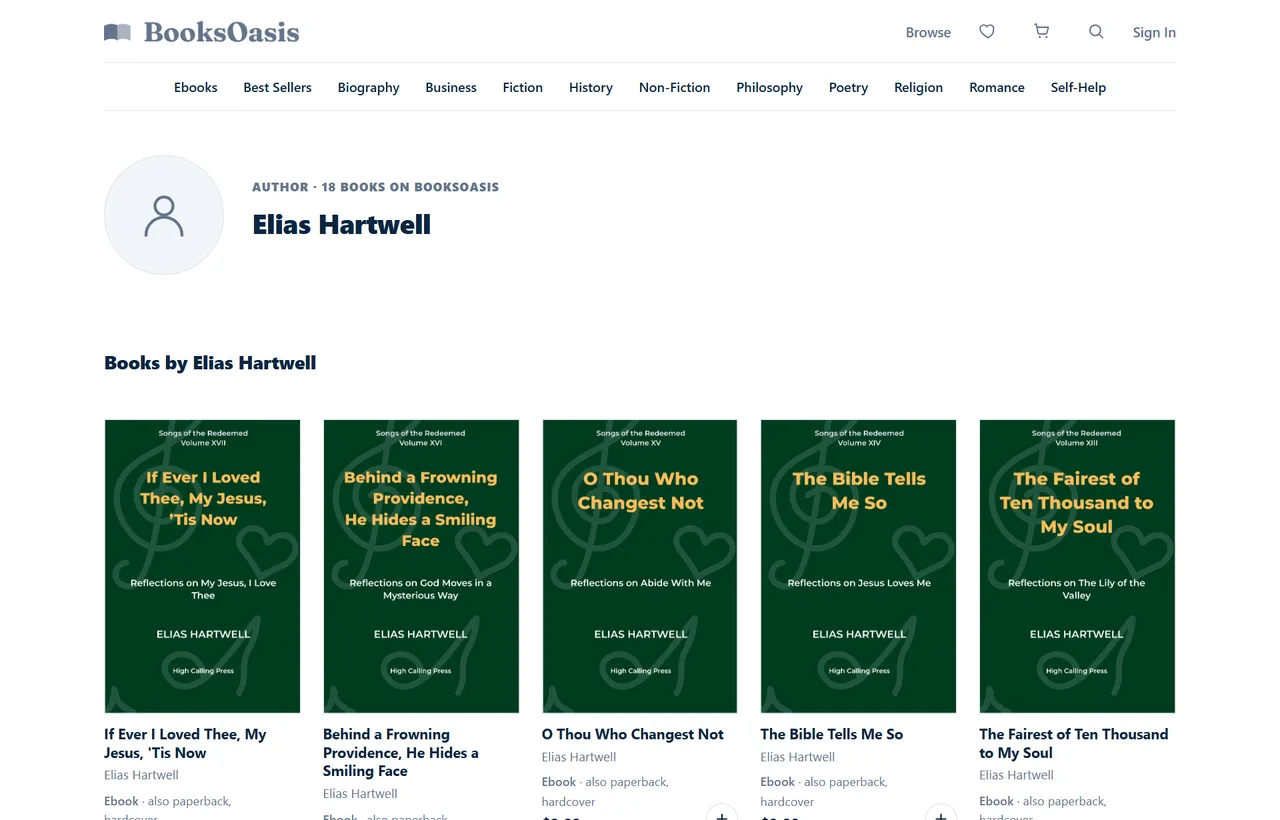
Every book on BooksOasis needs a description of at least 100 characters before it can be submitted, along with a cover, at least one genre and the files for each format. Your description appears on the book's page, and the opening lines help readers browsing genre shelves, author pages and series pages decide whether to click through.
What BooksOasis does not do
- It doesn't write or edit descriptions for you.
- Listings go through a moderation review, and descriptions must accurately describe the book.
Sources
Checked September 2026: BooksOasis: listing a book; BooksOasis: editions and print readiness.
In short
Hook in the first line, focus on one character or one outcome, make the stakes or benefits concrete, signal the genre honestly, keep it short and scannable, and end with an invitation. Then test it on real readers of your genre, and refine one element at a time.
Questions
How long should a book description be?
Most effective descriptions run 150 to 300 words. Long enough to hook and reassure, short enough to read on a phone. KDP allows up to 4,000 characters; BooksOasis needs at least 100.
What should the first line do?
Hook the reader. It's often the only line visible before 'Read more', so it should create curiosity, name the core conflict or state the book's biggest benefit.
Should a book description be written in first person?
Usually not. Most descriptions are in third person for fiction and second person ('you') for non-fiction. First person can work for memoir.
Should I include reviews in the description?
A short, genuine quote from a credible source can help, placed after the hook. Never invent or exaggerate praise.
How do I describe a book in a series?
State the position early (Book 2 of ...), say whether it stands alone, and avoid spoiling earlier books in the opening lines.
Should I use keywords in my description?
Naturally, yes: mention the genre, setting, subject and themes readers search for. Don't stuff keywords; it reads badly and some stores discourage it.
Can I use formatting like bold and line breaks?
Short paragraphs and line breaks help on every store. Some stores allow bold or italics; use them sparingly, for the hook or a key line.
What's the difference between fiction and non-fiction descriptions?
Fiction sells a story: character, conflict, stakes. Non-fiction sells an outcome: the problem, what the reader will learn or be able to do, and why this author.
Should I mention my credentials?
For non-fiction, yes, briefly, where they explain why readers should trust the book. For fiction, credentials matter less than the story.
How do I test a description?
Show it to a few readers of your genre and ask what kind of book they think it is and whether they'd read on. Change one element at a time and watch sales.
How often should I change my book description?
Only when you have a reason, such as good page views but few sales. Change one element at a time, usually the first line, and give each version a few weeks before judging.
What genre signals should a description include?
The cues readers of your genre look for: a ticking clock for thrillers, the couple and tone for romance, the small community for cozy mysteries, the problem and result for self-help. They should match the cover.
Should I compare my book to famous books?
A comparison can help readers place your book, such as 'for fans of' lines, but keep it honest and relevant. Don't claim a book is as good as a famous one; say who will enjoy it.
Put your description in front of readers
List on BooksOasis and keep 100% of your ebook price, from $29.99 a year.